The nature of intelligence
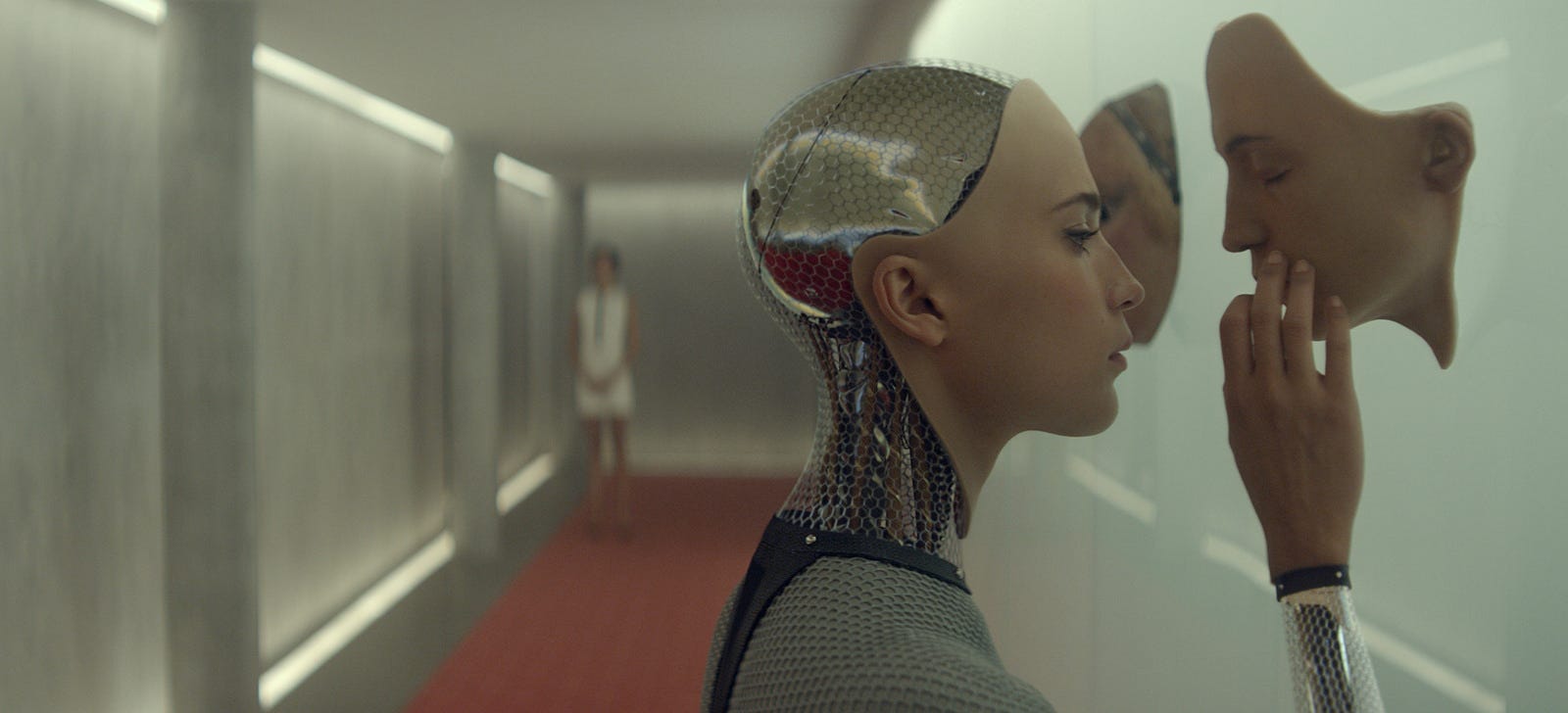
I have always been interested in the subject of
Artificial Intelligence. It is because by building AI we are
learning valuable lessons about ourselves. After all, we
consider us to be intelligent, but are not really sure what
that means. AI is an attempt to reverse engineer our mind and
to define intelligence by creating an abstracted version of it.
Can AI become smarter than us? What is the true nature of
intelligence? These are the questions that make me
wonder.
Very recently there have been some astonishing AI
advancements with models based on Deep Neural Networks (DNNs).
Apparently today AI can perform image identification better
than humans and win against the world champion of board game
GO. We have lost tic-tac-toe, checkers and chess to a digital
mind long time ago. These board games are closed environment
discreet systems that have winning conditions and rules
strictly defined. Older AIs used mostly brute-force and sheer
computing power to win against humans. DNNs however are solving
problems using evolved pattern recognition. This way they can
tackle more fuzzy and human-like problems that have vast
solution search space.
The holy grail of the field of AI is to develop the
so-called seed intelligence or general purpose intelligence. A
program that would exhibit such properties would be able to
modify itself and perform general purpose tasks that have been
given to it. In its versatility and adaptation it would be
similar to human intelligence. Since such intelligence would be
digital it might be many times more efficient than our meaty
brains and could quickly modify itself to become much more
advanced than homo sapiens.
So we have been able to develop AI that outmatches
humans in specific computational tasks, but still have no good
clue how to build an AI that is generic, can adapt itself and
creatively solve a wide range of tasks. Artificial neural
networks might be a part of this puzzle, but something
important is still missing. It seems that we have solved
separate parts of intelligence, but we still don’t know how to
glue them together. I feel that in order to unravel this
problem we need a better general understanding of the nature of
intelligence.
Many people know about IQ tests. We imagine that a
very smart and intelligent person must have a high IQ. IQ is
our definition of intelligence today. However these tests have
also been criticised for not taking into account such aspects
as creativity and social intelligence. General IQ tests cover
just a narrow space of human intelligence related to pattern
recognition. Also these tests are very human specific. Most of
us consider our pets to be somewhat intelligent, yet they would
not score anything on any human IQ test because these tests are
based on language. If we want to find the roots of intelligent
behaviour we have to go deeper. We have to start exploring
non-verbal intelligence that can be found in animals and
babies.
If you observe a newborn baby you will see that it
is always in constant motion while awake. From the first day
the baby tries to understand its environment. The movements of
the limbs is really a baby questioning his world: how does this
feel? It tries to move itself towards the feel good state. It
does not have to be taught to do it. In a way the learning
process is driven by the baby from the first day. We do not
recognise this because the question asking is non-verbal, but
the baby is constantly exploring and gathering information from
the environment surrounding it. When the baby becomes a toddler
and still can not speak he continues exploring the world by
pointing fingers at things, waiting for them to be named and
explained to him.
Yet in many countries this questioning pattern is
broken at school by the education system. Education is usually
based on a different definition of intelligence. It considers
pupils as dumb and empty when they enter school. In school the
pupils are taught information as if it has to be ‘put into’
their heads so that they can become smart and intelligent. Such
education system is neglecting the fact that intelligence comes
from the bottom up to the top, not the other way
around.
That is why education only works if the student is
curious. If he is asking a question then he is ready to
understand the answer. If there is only one way flow of
information from teacher to student then nothing can be taught.
Maybe that is the reason why we hardly ever learn anything new
from TV. When we are watching it we are flooded with answers
about the questions that we never really asked in the first
place.
Our AI models are being constructed using the same
outdated education pattern. The neural networks are passive in
their nature. They are ‘dumb’ and rigorous training has to be
performed on them with huge data sets in order for them to
learn how to perform a certain task. After being flooded with
information they are able to answer specific questions. But
they still lack the ability the newborn has — to question their
current environment.
So if we want to construct general purpose AI the
question asking has to start from the beginning non-verbally
and grow up to abstractions and language from that bottom
point. This implies the necessity of body. Body is the ground
in which the mind grows. It gives a way to start learning. If
the abstractions that are learnt by AI are not rooted in our
non-verbal physical reality then they can not be truly
universal.
Currently the progress of robotics is lagging
behind artificial neural networks. We can only construct robust
robots with a few sensors and several motors. To the contrary
human fingertips have approximately 2500 receptors per square
centimetre. There are large dedicated areas in our brains for
processing all this sensory input. If we could construct an
exceptionally sensitive and agile robot with a DNN and enable
it to explore its environment this creation would have a chance
of becoming the first universal learning AI.
After all, it looks to me that the nature of true
intelligence is not the ability to give an answer, but to ask
the right question. Non-verbal questioning using body is
natural to every sentient being. It might be the fabric and
essence of all intelligent behaviour as we know it.